
Why Have My Door Handles Suddenly Gone Floppy? A Real Composite Door Repair in West Allotments NE27
If your front door handles have suddenly started feeling loose, floppy or not quite right, it is worth getting it checked before it turns into a bigger problem.
This is exactly what happened on a recent job in West Allotments, NE27. The customer noticed the issue that morning and called before the door fully failed. That meant we caught it before it became a lockout situation, which is always the better outcome.
I am Locksmith Kev, a local independent locksmith covering Cramlington, Whitley Bay, North Tyneside and surrounding areas. This blog is here to help homeowners understand what can be happening inside the door when the handle starts to feel wrong.
What Does A Floppy Door Handle Usually Mean?
When a door handle suddenly feels loose, floppy or different from normal, many people assume the handle itself has failed.
Sometimes that is true. But on composite doors and uPVC doors, the problem can also be inside the multipoint lock gearbox.
The gearbox is the centre section of the lock. It is the part the handles operate through the spindle. When you lift the handle, the gearbox drives the hooks, rollers, bolts or locking points up and down the door.
If the internal spindle follower starts to crack or wear, the handle can begin to feel loose before the lock fully fails.
The Early Warning Signs
Common warning signs include:
- The handle feels floppy or loose
- The handle drops more than usual
- You need to lift the handle harder than normal
- The door locks better when open than when closed
- The key feels tighter than it used to
- The problem changes with hot or cold weather
- You hear small grinding or clicking noises inside the lock case
If you notice these signs, try not to force the handle. Forcing it can break more parts inside the gearbox and may leave the door jammed locked or jammed unlocked.
A Real Example From West Allotments, NE27
On this job, the door was a composite door with a Lockmaster style multipoint lock. The customer had noticed the handles had become loose that morning. Thankfully, they called before the lock failed completely.
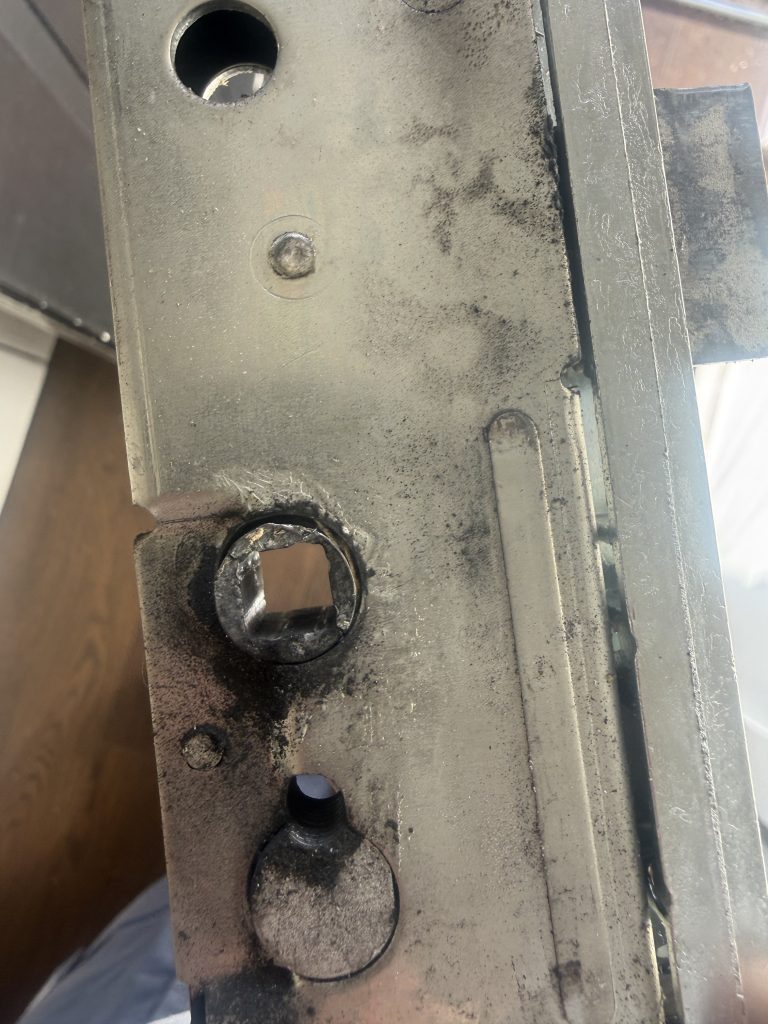
When I stripped the door down, the failed part was inside the centre gearbox. The spindle follower — the round part with the square hole where the handle spindle passes through — had started to crack around the square opening.
This type of part is often made from a zinc die-cast type metal. It is common in multipoint lock gearboxes. It works well when everything is aligned correctly, but over time, pressure, wear and misalignment can cause cracking.
In this case, the failed gearbox was not the full story. The real cause was slightly more hidden.
The Real Cause Was A Tight Cut-Out Around The Euro Cylinder
When the euro cylinder was removed, it became clear that the cut-out in the door was slightly too tight. It was only around 2mm short, but that was enough to put pressure on the cylinder and slightly twist the multipoint lock body.
The lock strip had also been very tight in the routed channel. It had to be carefully prised out rather than simply removed. That showed the mechanism had been sitting under pressure for a long time.
This was not a dramatic installation fault that caused instant failure. The door had lasted over 10 years. But that small amount of pressure had slowly worked against the gearbox every time the handle was lifted.
Over time, that slight twist and compression can fatigue the internal follower until the handle starts to feel loose and eventually the gearbox fails.
This Is One Reason Handles Can Go Floppy — Not The Only Reason
It is important to say this clearly: this is one real-world example, not the only reason door handles become floppy.
Other common causes include:
- Loose handle screws
- Worn handle springs
- A failing gearbox
- A dropped or misaligned door
- Locking points catching in the keeps
- Weather movement in composite or uPVC doors
- Wear and tear from daily use
- People forcing the handle when the door is already stiff
That is why diagnosis matters. A floppy handle is a symptom. The important part is finding out what caused it.
Why A Good Handle Can Hide The Problem
This door had a good quality secure handle set with a protected escutcheon. That is exactly the sort of handle you want on a front door.
But strong handles can also hide small alignment issues. Once the euro cylinder and handle fixings are tightened, the furniture can pull everything into line. From the outside, everything looks solid.
The door locks. The handle feels secure. Nothing looks obviously wrong.
But inside the door, the lock case may be under a slight twist or pressure. Over years of use, that small pressure can slowly weaken the internal parts.
What I Did To Stop The Same Fault Happening Again
Replacing the failed gearbox was only part of the repair.
The important part was relieving the tight area around the euro cylinder. I carefully removed around 2mm from the cut-out so the cylinder and lock case could sit naturally without compression.
That means the new lock is not being forced into the same stressed position. The aim is not just to get the door working today, but to help the repair last properly.
This is where experience matters. Sometimes a failed gearbox is the problem. Sometimes it is only the symptom.
Simple Checks You Can Do Yourself
If your handles have suddenly gone floppy, there are a few safe checks you can do before calling a locksmith.
1. Try the handle with the door open
Open the door and lift the handle. If it works smoothly when open but feels stiff when closed, the door may be misaligned or the locking points may be catching.
2. Check if the handle has suddenly changed
If the handle felt normal yesterday but feels loose today, do not ignore it. Sudden changes usually mean something has moved, cracked or started to fail.
3. Listen for clicking, grinding or loose fragments
Small broken pieces inside a gearbox can move around and jam the mechanism.
4. Do not keep forcing the handle
If the handle is stiff, floppy or not returning properly, forcing it can turn a repairable fault into a lockout.
5. Look for signs the door has dropped
If the door catches at the top, bottom or side, the lock may be working harder than it should.
When Should You Call A Locksmith?
You should call a locksmith if:
- The handle has suddenly become floppy
- The handle lifts but the door does not lock properly
- The key has become stiff
- The door only locks when lifted hard
- You feel grinding inside the lock case
- The lock works differently when the door is open compared with closed
The best time to call is before the lock fully fails. In this West Allotments job, the customer noticed the issue early and avoided being locked out.
If your door has already jammed, or you are worried it may fail, you can also use our 24/7 emergency locksmith service for jammed doors, failed multipoint locks and urgent lock problems.
Why Finding The Cause Saves Money Long Term
Anybody can change a part. The value of an experienced locksmith is in understanding why the part failed.
If a gearbox fails because of door alignment, tight routing, a misfitted cylinder, obstruction on the locking points or seasonal door movement, simply fitting a new gearbox may only restart the same problem.
Finding the cause helps the next repair last longer.
That saves the customer money, reduces the chance of another breakdown and keeps the door working as it should.
Composite Door Lock Repairs In West Allotments, Whitley Bay And North Tyneside
This repair was carried out in West Allotments, NE27, close to Whitley Bay and North Tyneside.
If you are in the area and your composite door handles have gone loose, your multipoint lock feels stiff, or your door is becoming difficult to lock, you can find more information on our Whitley Bay locksmith service page covering West Allotments, NE27 and surrounding areas.
For general locksmith help, lock repairs, door problems and advice, visit Cramlington Locksmith Kev.
Final Thought From Kev
A floppy handle is not always an emergency, but it is usually a warning sign.
In this case, the customer caught it at the right time. The gearbox had started to fail, but the door had not jammed. Once the lock was stripped down, the cause became clear: a small amount of pressure around the euro cylinder had been twisting the mechanism for years.
It was only around 2mm, but over time, small faults become bigger faults.
That is why locksmith work is not just about changing parts. It is about understanding doors, locks, alignment, wear, and the small details that make a repair last.
Frequently Asked Questions
Why has my door handle suddenly gone floppy?
A floppy door handle can be caused by loose handle screws, worn springs, a failing multipoint gearbox, a cracked spindle follower, or door misalignment putting strain on the lock.
Is a floppy composite door handle dangerous?
It is not always dangerous, but it can be an early warning sign. If the internal gearbox is failing, the door may eventually jam locked or unlocked.
Can I keep using the door if the handle feels loose?
You can use it carefully, but avoid forcing the handle. If it feels different, stiff, loose or unreliable, it is better to get it checked before it fails completely.
Why does my door lock work when open but not when closed?
This usually points to alignment problems. The locking points may be catching in the keeps, or the door may have moved slightly due to wear, adjustment or weather changes.
Can a small fitting issue really damage a multipoint lock?
Yes. A small amount of pressure or misalignment may not cause instant failure, but over years it can place extra stress on the gearbox and internal parts.
Do I need a new full multipoint lock strip?
Not always. Sometimes only the centre gearbox needs replacing. Other times the full strip may be required. The correct repair depends on the exact fault, lock type and condition of the door.
Do you cover West Allotments and Whitley Bay?
Yes. Locksmith Kev covers West Allotments, Whitley Bay, North Tyneside, Cramlington and surrounding North East areas.